The Texas Sculpture Garden in Frisco is a free, four-acre outdoor gallery at the entrance to HALL Park, with more than 40 large works by Texas artists set along winding paths, lawns and ponds. It’s open dawn to dusk daily and ranks among the easiest stops in our guide to Frisco’s history, culture and museums.
It works for almost anyone who likes a walk with something to look at: art fans, parents whose kids need to burn off energy, couples with an hour to fill before dinner. The one real caveat is heat. From June through September, go in the first couple of hours after sunrise or the last hour before dusk, because a noon loop in July is more endurance test than art walk. Checked September 26, 2026.
| At a glance | Details |
|---|---|
| Cost | Free admission; Visit Frisco lists parking as free |
| Hours | Outdoor collection dawn to dusk daily; indoor art weekdays 9 a.m. to 5 p.m. (as of September 2026) |
| Address | 6801 Gaylord Parkway, Frisco, TX 75034 |
| Time needed | 45 to 90 minutes for the garden; about 2 hours with Kaleidoscope Park |
| Best for | Art lovers, photographers, easy family walks, a free hour between bigger plans |
| Book ahead | Nothing to book; download the Otocast app if you want the audio tour |
What is the Texas Sculpture Garden?
HALL Park is a 162-acre office and mixed-use development along the Dallas North Tollway, built by Craig Hall’s HALL Group. The sculpture garden fills about four acres at the park’s entrance on Gaylord Parkway, and it’s the most public side of Hall’s art collecting. The outdoor works come from his private collection, chosen with curator Patricia Meadows, and the garden describes itself as the largest private collection of contemporary Texas sculpture ever assembled and opened to the public.
The Texas part is the whole idea. The collection sticks to artists who live and work in the state, and it doesn’t stop at big-city names. Sculptors from Houston, Dallas, San Antonio and Austin share the lawns with artists from small towns such as Sanger, Bolivar and Ovilla. That spread is the garden’s strongest argument. It reads as a survey of what Texas sculptors are making now, not a lineup of imported trophies.
“Contemporary” matters too. This isn’t a field of bronze cowboys and longhorns. Expect modern work, much of it abstract, that changes as you walk around it. If Old West bronzes are what you’re after, the longhorn sculptures that honor Frisco’s cattle-trail past are covered in our history of Frisco, from railroad town to boomtown.
One name trap to avoid: searches sometimes surface the Lillie and Hugh Roy Cullen Sculpture Garden, which belongs to the Museum of Fine Arts, Houston, roughly four hours south. Different city, different collection.
Is the Texas Sculpture Garden in Frisco worth visiting?
For the price, which is nothing, it’s one of the better-value hours you can spend in Frisco. The pieces are big enough to hold their own outdoors, there’s enough range that you won’t feel you’ve seen the same idea 40 times, and the landscaping gives each work some breathing room.
It helps to be clear about what it isn’t. This is an art walk on the front grounds of an office campus beside a major tollway, not a botanical garden or a secluded nature park. Office towers rise behind the sculptures, traffic noise carries, and on a weekday lunch hour you may share the paths with people from the surrounding buildings out for a walk.
Think of it as a park rather than a museum. The official site doesn’t list a cafe, a shop or a staffed desk in the garden, so plan food and breaks around your next stop.
Who gets the most out of it:
- Art fans curious about what Texas sculptors are making now.
- Families with young kids, who can treat it as a scavenger hunt.
- Photographers, especially in the hour before dusk.
- Anyone with a gap on the Tollway corridor between check-in and dinner.
With only one day in town, put a headline attraction first and fold the garden in only if you’re nearby. Our guide to how many days to spend in Frisco helps you decide what fits.
Verdict: Worth an hour for anyone curious about art or looking for a free outdoor stop. Not worth a special cross-Metroplex drive on its own unless modern sculpture is your thing.
How to walk the garden: three ways to do it
Four acres is compact. You could walk from one side of the garden to the other in a few minutes without stopping, so the real question is how much time you want to give the art.
| Walk | Time | What it covers | Best for |
|---|---|---|---|
| Quick loop | 30 to 45 minutes | The main garden paths, stopping only at pieces that grab you | Kids under 8, hot days, a break on a driving day |
| Audio-tour walk | 60 to 90 minutes | The garden with Otocast commentary at each stop | First-timers and art fans |
| Full HALL Park art walk | 2 hours or more | The garden, Kaleidoscope Park and outdoor art around the campus | Photographers and anyone with a free morning |
The quick loop
Follow the main paths and stop only where a piece pulls you back for a second look. Don’t try to read up on everything; the point is to see the collection at walking pace and leave before the heat or the kids turn on you.
Verdict: The right call with small children, in summer, or when you only have a gap between other plans.
The audio-tour walk
This is the version most first-timers should do: load the Otocast audio tour and walk the garden stop by stop, listening as you look. The commentary puts a name, a story and some context behind each piece, which is exactly what abstract sculpture needs. Without it, a lot of these works are handsome objects. With it, they turn into people and ideas.
Verdict: The best use of an hour here. Budget 60 minutes and you’ll probably take 90.
The full HALL Park art walk
Start in the sculpture garden, then keep going: over to Kaleidoscope Park for Janet Echelman’s suspended net sculpture and on around the campus, where more pieces stand outside the office buildings. Download the garden’s PDF collection guide first, wear real walking shoes, and carry water.
Verdict: A satisfying morning on a mild fall or spring day. In August, it’s too much; do the quick loop instead.
What you’ll see in the collection
There’s no single style or theme here. The through line is geography, and the fun is comparing how differently Texas artists handle scale, material and form.
Artists from big cities and small towns
Some artists come from the big art scenes in Houston, Dallas, San Antonio and Austin; others work out of towns like Sanger, Bolivar or Ovilla. Walking the garden, you often can’t tell which is which, and that seems to be the point.
A good way to engage: pick three favorites as you walk, then look up each artist and hometown in the app or the collection guide afterward. It’s a quick way to learn that some of the boldest work in the garden came from places with a single traffic light.
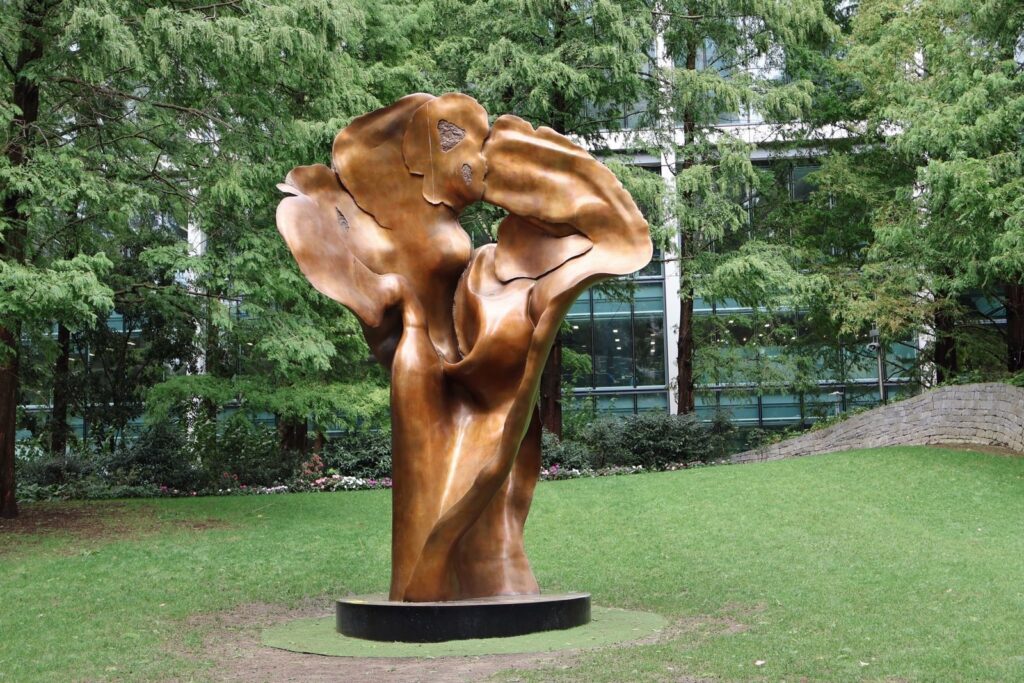
George Tobolowsky’s Wandering
HALL Park uses Wandering by George Tobolowsky as the lead image on its art page, and it’s a fair introduction to the collection. Tobolowsky is a Dallas artist known for welding salvaged steel into new forms, so the fun with his work is walking all the way around it and spotting the industrial parts that went into it.
The setting: paths, lawns and water
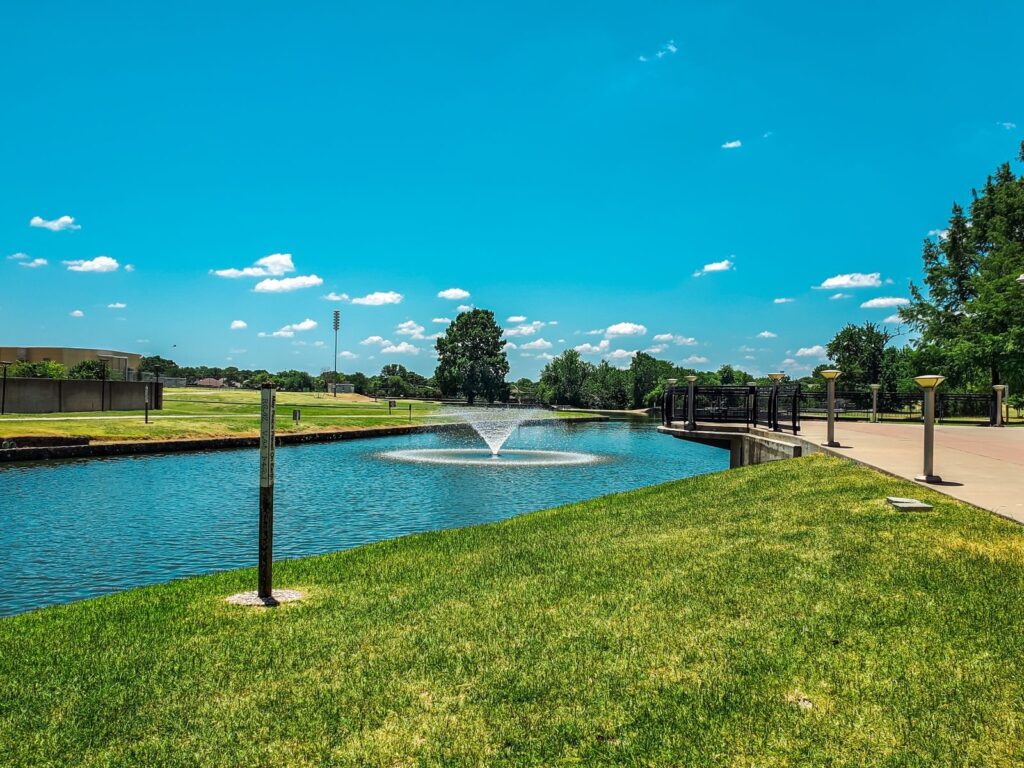
The garden was designed as a landscape for the art, not a lawn with sculptures dropped onto it. Winding paths, planted beds, lakes and fountains are laid out to give each work a backdrop and a sightline. Walk the paths slowly and you’ll notice how often a piece frames the next one or lines up with the water behind it.
The office towers are part of the view too. Some pieces read best against open sky, others against glass and stone, so try both angles.
How does the Otocast audio tour work?
The garden’s self-guided audio tour runs through Otocast, an app for public art and walking tours that you download to your phone. Once it’s installed, you pull up the Texas Sculpture Garden tour and play the stop for whichever piece you’re standing in front of. The tour is pitched as a way to hear about the art directly from the artists, which is the best reason to bother.
A few practical tips:
- Download it before you arrive. Install the app and open the tour on hotel Wi-Fi.
- Bring earbuds. Other people are there for a quiet walk, and phone speakers carry across open lawns.
- Charge your phone. An hour of audio plus photos drains a battery fast, especially in summer heat.
- Grab the PDF guide as a backup. The garden’s website offers a downloadable collection guide and map. If the app misbehaves, you still know what you’re looking at.

Verdict: Use it. The gap between seeing these works cold and hearing the artists explain them is big, and it costs you nothing but a download. Find the tour link on the garden’s audio tour page.
Beyond the garden: more art at HALL Park
HALL Park counts more than 200 public art pieces across the whole development, and two extras are worth the walk.
Kaleidoscope Park and Butterfly Rest Stop
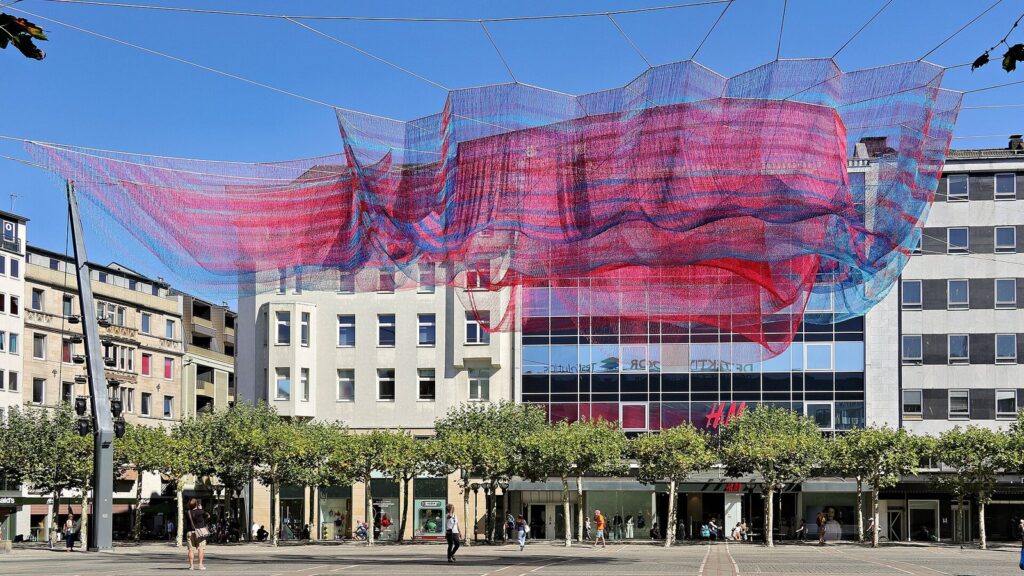
Kaleidoscope Park opened inside HALL Park in fall 2024, and its Arts Plaza holds Butterfly Rest Stop by Janet Echelman, which HALL Park describes as one of the largest outdoor public art installations in Texas. Echelman is known for huge suspended net sculptures that ripple and shift with the wind, so a breezy day shows it off best. Stand underneath and look up, then step back to see the whole shape against the sky.
The park also hosts free public events through the year, which can make an evening visit livelier. Check what’s on in our roundup of Frisco events this month, or browse our overview of art and cultural events in Frisco for the festival calendar. For more green space, see our guide to the best parks in Frisco.
One caution: Kaleidoscope Park is a separate park from the garden, so check its own hours and event schedule rather than assuming it matches the garden’s dawn-to-dusk rule.
Indoor art on weekdays
The garden’s official hours list interior art as viewable weekdays from 9 a.m. to 5 p.m. That means a Saturday visit gets you the outdoor collection only. If the indoor pieces matter to you, plan a weekday, and remember you’re a guest in working office buildings.
More public art around Frisco
The garden is the biggest concentration of sculpture in the city, but it isn’t the only one. Our guide to art galleries and public art in Frisco TX maps out the murals, street sculpture and gallery spaces elsewhere, and the rotating art galleries at the Frisco Discovery Center make an easy indoor follow-up on a hot afternoon.
When is the best time to visit?
Season and time of day shape a visit here more than anything else.
| Season | What to expect | Best time of day |
|---|---|---|
| Spring (March to May) | Mild, green, some storms | Morning or late afternoon |
| Summer (June to September) | Hot, highs often in the mid to upper 90s | The first hour or two after sunrise |
| Fall (October to November) | Usually the most comfortable weather of the year | Late afternoon, for golden light |
| Winter (December to February) | Cool, occasional freezes, short days | Midday; sunset is around 5:30 p.m. in December |
Spring is the easy season. The landscaping is at its greenest and a slow audio-tour walk is comfortable at almost any hour. Spring storms roll in fast, though, so check the radar and don’t linger on open lawns if you hear thunder.
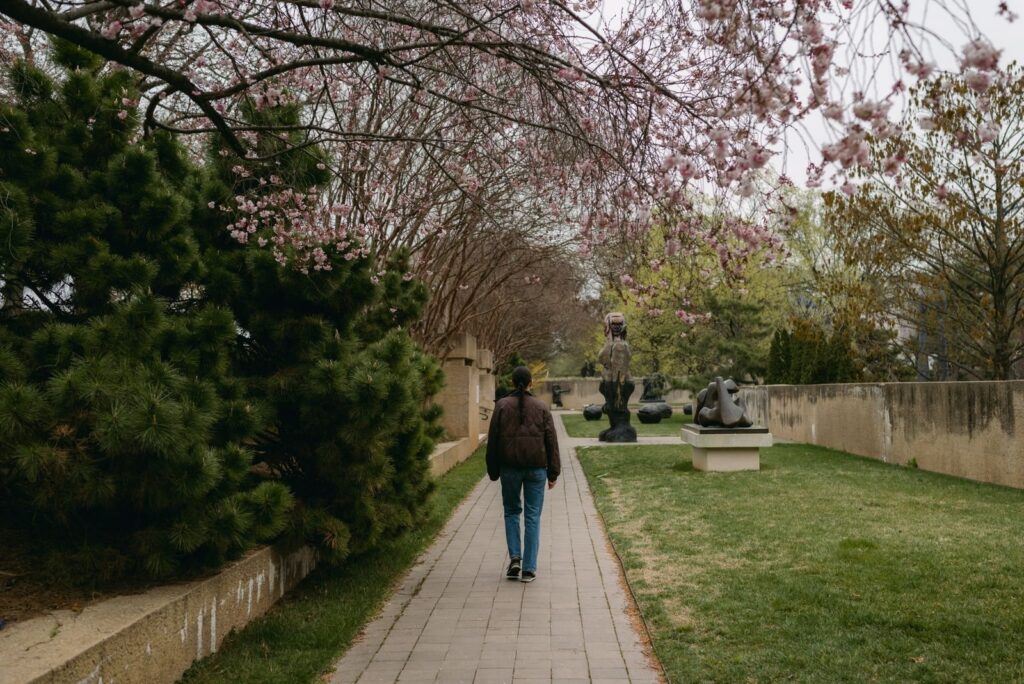
Summer is the hard one. Heat builds quickly after mid-morning. Go at first light, do the quick loop, and save indoor galleries for the afternoon.
Fall is the pick of the year. October and November bring cooler afternoons and lower sun, which is kinder on your skin and much better for photos. If you can choose one time to visit, choose a fall weekday afternoon about an hour before dusk.
Winter days are short, with sunset around 5:30 p.m. in December, so start early enough to finish in daylight. A clear, cold winter day can be excellent, with thin crowds and hard shadows that show off shape.
Weekday versus weekend makes less difference than weather. Weekday lunch hours bring office workers onto the paths. Weekend events at Kaleidoscope Park can bring crowds and fill nearby parking.
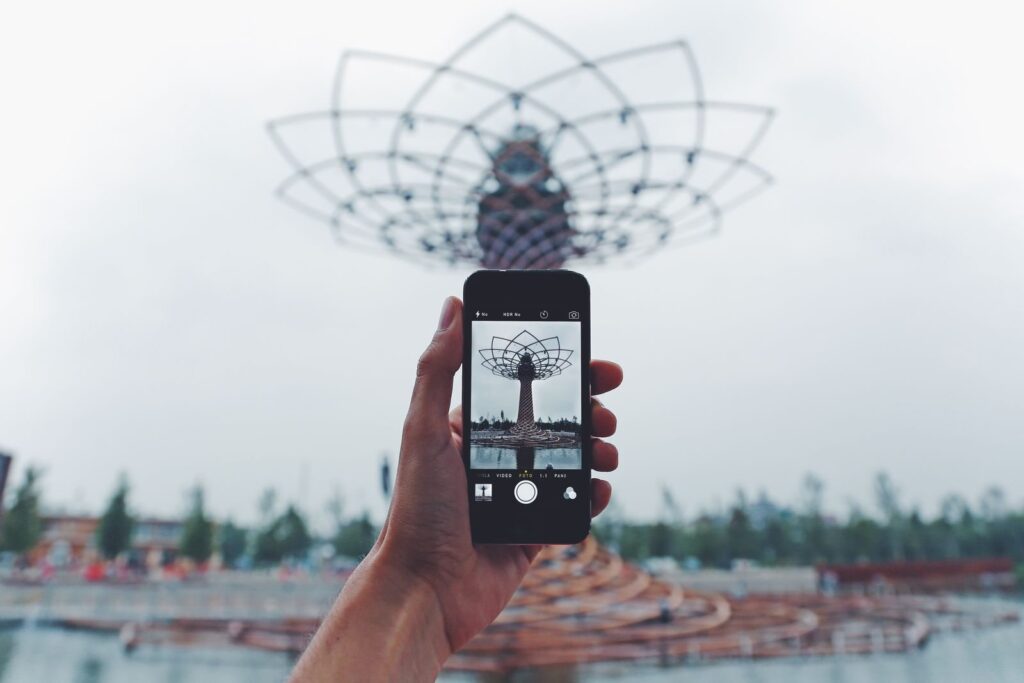
Photography tips for the sculpture garden
Large outdoor sculpture is hard to photograph well: the piece is big, the background is busy, and the best angle is rarely the first one. A few things help:
- Walk a full circle first. Before you raise the camera, walk all the way around the work. Then shoot from the angle that surprised you.
- Use the light. The hour before dusk gives warm, low light and long shadows that show off form. Midday sun flattens everything and blows out polished surfaces.
- Watch the background. Office towers, parked cars and light poles creep into frames. Crouch low to put a piece against open sky, or step sideways to line it up with water or trees.
- Add scale. A person standing a few steps from a work shows how big it really is, which photos otherwise hide.
- Try overcast days. Cloud cover softens reflections on shiny metal and evens out harsh shadows.
- Skip the drone. HALL Park is private property ringed by office buildings. Leave the drone in the car unless you’ve cleared it with HALL Park first, and do the same for a paid portrait or commercial shoot.
Visiting with kids, strollers or a dog
The garden is an easy family stop: free, compact and open all day. Young kids often enjoy big sculpture more than adults expect, because there’s no glass case between them and the art.
With kids: Turn the visit into a hunt. Print or download the collection guide, pick five pieces, and have the kids find them. Ask what each one looks like before you tell them its title. The firm rule is look, don’t climb: these are original artworks, and scrambling on them can damage the piece and hurt the child.
With a stroller: The garden is laid out around walking paths, so a stroller should manage the main routes. Cutting across grass to get close to a particular piece is harder going, so allow a little extra time.
With a dog: The garden’s official pages don’t state a pet policy, so look for posted rules at the entrance before you bring one. If dogs are allowed, keep yours on a short leash, clean up after it, and remember that summer pavement gets hot enough to hurt paws. Early morning is better for everyone.
Accessibility: If you use a wheelchair or have limited mobility, stick to the main paths and contact HALL Park through its website before your visit to ask about the easiest routes and parking.
Planning your visit to the Texas Sculpture Garden
Getting there
The garden sits at 6801 Gaylord Parkway, where HALL Park meets the Dallas North Tollway, a short hop north of SH 121 (the Sam Rayburn Tollway). Honest drive times, traffic permitting:
- From The Star: 5 to 10 minutes south along the Tollway corridor.
- From Frisco Square: 10 to 15 minutes.
- From DFW Airport: 25 to 40 minutes via SH 121 and the Tollway, longer at rush hour.
- From downtown Dallas: 30 to 45 minutes north on the Dallas North Tollway.
Both the Dallas North Tollway and SH 121 are toll roads, and the service roads alongside them are free if you’d rather avoid tolls. Frisco has no DART rail service, so plan on a car or a rideshare. Our guide to getting around Frisco without a car covers the realistic options.
Keep your cities straight: the garden is in Frisco, but Legacy West, just south of SH 121, is in Plano.
Parking
Visit Frisco lists parking as free. HALL Park is a working office campus, so park where signs allow and leave reserved tenant spaces alone. Parking is easiest on weekends and after 5 p.m. on weekdays, except when a Kaleidoscope Park event is on.
Timing
Give the garden 45 to 90 minutes, or about two hours if you add Kaleidoscope Park and the outdoor art around the campus. The outdoor collection closes at dusk, and the indoor art needs a weekday between 9 a.m. and 5 p.m.
What to book
Nothing. There are no tickets or timed entries; just download the Otocast app and the collection guide. If you’re pairing the walk with dinner, book that instead; The Star, a few minutes up the Tollway, has sit-down restaurants that get busy on weekends.
What to skip
- Skip midday in summer. The heat makes the walk a chore, and the light is poor for photos anyway.
- Skip a special trip if your time is short. Fit the garden in when you’re already on the Tollway corridor rather than crossing town just for it.
Pair it with other Frisco culture stops
The garden works best as part of a culture day. Each of these is a short drive away and adds something the garden doesn’t have.
| Stop | What it adds | Time to allow |
|---|---|---|
| Frisco Discovery Center | Rotating art galleries, the National Videogame Museum and indoor exhibits | 1 to 3 hours |
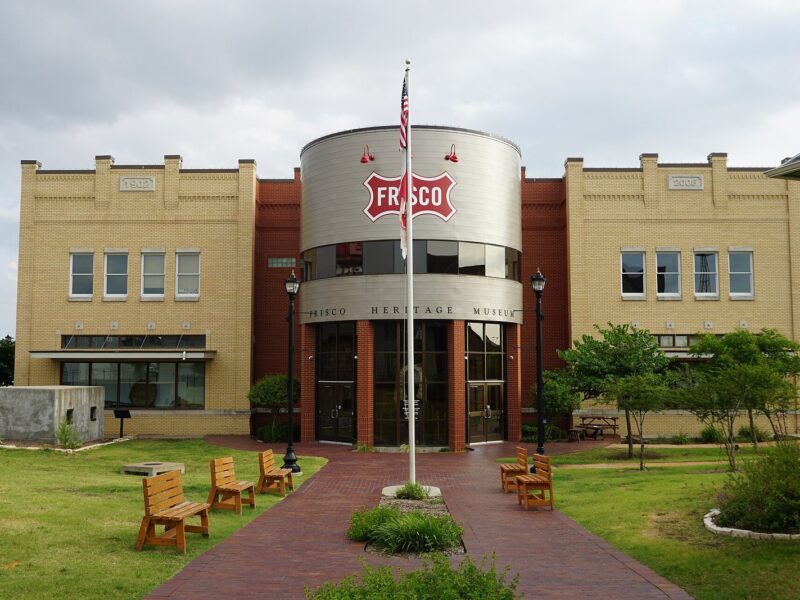
| Frisco Heritage Museum | Local history, with historic buildings on the grounds | 1 to 2 hours |
| Museum of the American Railroad | Historic locomotives and railcars you can walk among outdoors | 1.5 to 2.5 hours |
| Public art around Frisco | Murals, street sculpture and small galleries across town | Self-paced |
A good hot-weather pairing: garden at 8 a.m., Discovery Center galleries through the middle of the day, lunch in between. A good history pairing: the garden in the morning, the heritage museum and the railroad museum in the afternoon, which gives you Frisco’s past and present in one day.
For the bigger picture, including how these places fit together and which to prioritize, see our full Frisco culture and museums guide. Separate guides on Frisco’s cultural events and performances, its notable architecture and landmarks, and TrainTopia at the Frisco Discovery Center are coming soon.
Frequently asked questions about the Texas Sculpture Garden
Is the Texas Sculpture Garden free?
Yes. Admission is free, and Visit Frisco lists parking as free too. There are no tickets or reservations, and the self-guided Otocast audio tour runs on an app you download to your phone. The garden is part of Craig Hall’s private collection at HALL Park, opened to the public at no charge, so the only thing you’re spending is your time and some sunscreen.
What are the Texas Sculpture Garden hours?
The outdoor collection is open every day from dawn to dusk, according to the garden’s official site as of September 2026. The indoor art at HALL Park can be seen weekdays from 9 a.m. to 5 p.m. Because dusk moves through the year, arriving by 4 p.m. in winter gives you enough light to walk the whole garden comfortably.
How long does it take to walk the Texas Sculpture Garden?
Plan 45 to 90 minutes. The garden covers about four acres, so you could cross it in a few minutes, but stopping at 40-plus works and listening to the audio tour takes longer. Add another 30 to 60 minutes if you want to see Kaleidoscope Park and the outdoor art around the rest of HALL Park.
Where do you park for the Texas Sculpture Garden?
The garden is at 6801 Gaylord Parkway in HALL Park, and Visit Frisco lists parking as free. Because HALL Park is an office campus, use spaces where signs allow and avoid reserved tenant spots. Weekends and weekday evenings are easiest, though events at Kaleidoscope Park can fill nearby lots.
Is there a guided tour of the sculpture garden?
The garden’s official site points visitors to its self-guided audio tour on the Otocast app rather than scheduled guided walks. You play a stop for each piece as you reach it, and the tour is pitched as a way to hear about the works from the artists themselves. A downloadable PDF collection guide on the garden’s website works as a backup map.
Can you bring a dog to the Texas Sculpture Garden?
The garden’s official pages don’t spell out a pet policy, so check the posted rules at the entrance before you walk in with one. If dogs are allowed on the day, keep yours on a short leash and clean up after it. In summer, go early, because pavement on the paths gets hot enough to hurt paws.
Is the Texas Sculpture Garden in Frisco or Plano?
It’s in Frisco. The garden’s address is 6801 Gaylord Parkway, Frisco, TX 75034, inside HALL Park along the Dallas North Tollway. The confusion comes from Legacy West and other Plano destinations just south of SH 121. If your map app sends you to Plano, check the address before you drive.
Final thoughts
The Texas Sculpture Garden won’t fill a day, and it doesn’t try to. What it gives you is an hour with some of the most interesting work Texas sculptors are making, for free, a few minutes from your hotel. Go early in summer, late in fall, download the audio tour, and walk around every piece before you decide what you think of it. Then keep going: the rest of Frisco’s museums and cultural stops are close by.
Related Frisco Guides
- Art Galleries and Public Art in Frisco TX: murals, galleries and street sculpture elsewhere in Frisco
- Frisco Discovery Center: Science, Art & Exploration Guide: rotating art galleries for a hot afternoon
- Frisco Heritage Museum: Complete Visitor Guide (2026): Frisco’s local history, a short drive away
- Museum of the American Railroad Frisco: What to See & Do: historic locomotives to pair with a morning art walk
- Outdoor Activities & Parks in Frisco Texas: Nature Lover’s Guide: more outdoor space across the city
- Art and Cultural Events in Frisco TX: festivals and arts events through the year
Sources and verification
Details in this guide were checked on September 26, 2026 against the official sources below. It is compiled from them rather than from other travel lists, and it doesn’t describe first-hand visits. Prices, hours and schedules change, so confirm with the venue before you go.
- Texas Sculpture Garden: official site
- Texas Sculpture Garden: Otocast audio tour
- HALL Park: Art at HALL Park
- Visit Frisco: Texas Sculpture Garden
Photo credits
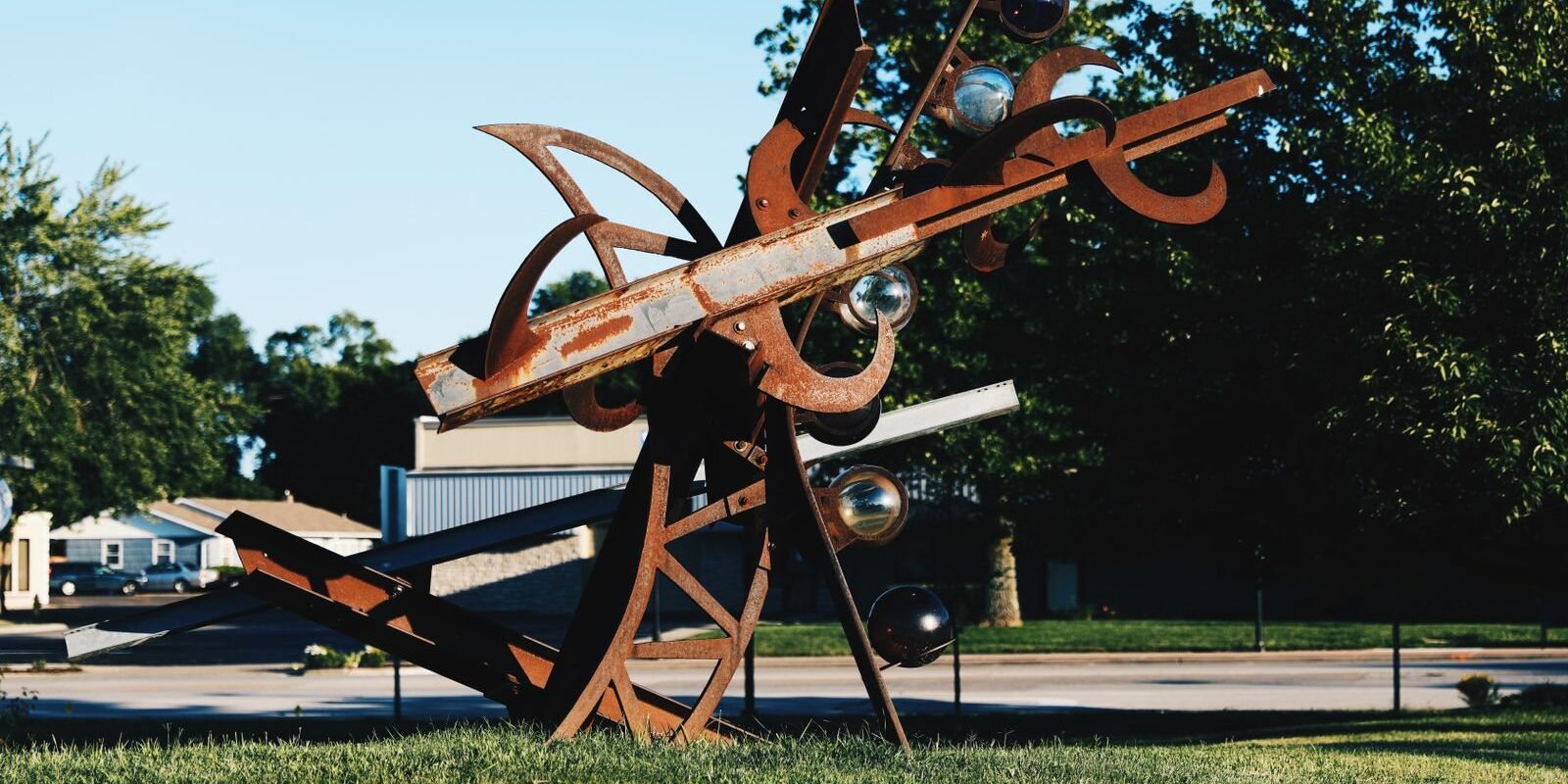
- Rusted steel abstract sculpture on a lawn, like the modern works at the Texas Sculpture Garden in Frisco (top photo): photo by Stephen Fuller, Pexels (Pexels License)
- Tall abstract bronze sculpture on a round base in a tree-lined lawn: photo by Sarah O’Shea, Pexels (Pexels License)
- Pond with a spray fountain beside a paved walkway and green lawn under a blue sky: photo by Terrance Barksdale, Pexels (Pexels License)
- Woman in a yellow raincoat wearing headphones and looking at her smartphone outdoors: photo by Vitaly Gariev, Pexels (Pexels License)
- Janet Echelman’s red and blue net sculpture suspended above a city square in Frankfurt: photo by Dr. Thomas Liptak, Wikimedia Commons (CC BY-SA 4.0)
- Person walking a paved path under blossoming trees past sculptures on a lawn: photo by Paige Thompson, Pexels (Pexels License)
- Hand holding a smartphone to photograph a large latticed metal structure: photo by Image Hunter, Pexels (Pexels License)