Before the Cowboys, before PGA of America, before a single skyscraper, Frisco was a Burlington Northern Santa Fe rail town ringed by cotton fields and family farms. That Frisco still exists — you just have to know where to look. It’s preserved on four quiet acres in the center of town, and it’s completely free to walk through.
The Frisco Heritage Museum is one of the city’s most underrated free attractions. Between the indoor museum and the surrounding Heritage Village, you get turn-of-the-century printing presses, a 1915 Model T and a 1930 Model A, the original Lebanon chapel, a one-room schoolhouse, a 60-ton steam locomotive you can climb aboard, and a full timeline of how a tiny railroad stop became a boomtown. This guide covers what to see, when to go, the 2026 reopening, and the tips that make a visit great. For the wider picture, see our pillar on Frisco TX museums.
Frisco Heritage Museum at a Glance
The essentials up front, so you can plan around them. Details are 2026 — confirm current hours and reopening status before you go.
| Detail | Info |
|---|---|
| Admission | Free (donations encouraged) |
| Hours | Tuesday–Saturday, 10 AM–5 PM (closed Sun & Mon) |
| Address | 6455 Page Street, Frisco, TX 75034 |
| Time needed | 90 minutes to 2 hours |
| Parking | Free, on-site and at the adjacent library lot |
| Best for | History buffs, families, budget travelers |
| 2026 note | Reopening in 2026 after late-2025 maintenance |
Here’s the short version: it’s free, it’s family-friendly, and it’s the single most complete look at old Frisco anywhere in the metroplex. It’s also the perfect counterweight to the bigger, glossier attractions — a reminder of what the city was before it exploded.
What Is the Frisco Heritage Museum?
The Frisco Heritage Museum is a city-owned history museum on the Frisco Heritage Center campus, just east of Frisco City Hall and the Frisco Public Library. It’s run through a partnership between the City of Frisco and the Heritage Association of Frisco, and it tells the city’s story from its late-1800s railroad-town origins through the modern growth era. Inside, you’ll find carefully curated permanent exhibits plus a rotating gallery for special shows.
But here’s what actually sets it apart: it isn’t just an indoor museum. The four-acre Heritage Village surrounding the building is a living-history area of relocated and restored historic structures — the original Lebanon chapel, an old one-room schoolhouse, original-structure homes, a gazebo, the original Frisco depot, the calaboose (an old jail), a 60-ton steam locomotive, a wooden caboose, and more. Together they recreate what early-1900s small-town Frisco actually looked like, and you walk right through the middle of it.
Permanent Exhibits Inside the Museum
Start indoors, especially in summer when the air conditioning is welcome. The interior exhibits are compact but genuinely well done.
- The printing press: a working turn-of-the-century press donated from a North Texas family operation. Demonstrations run on select Saturdays — worth timing your visit around.
- Service station: a recreated early service station with a 1915 Ford Model T and a 1930 Ford Model A. Kids love peeking inside the vintage cabs.
- Early 1900s parlor: a fully recreated turn-of-the-century home parlor with period furnishings, music boxes, and a Victrola.
- 1960s-era den: a jump forward in time to a recreated 1960s family den — the TV, kitchen, telephone, and decor of the era. It fascinates younger visitors who’ve never seen a rotary phone.
- “King Cotton” exhibit: the agricultural story of how cotton built early Frisco’s economy, with farming tools, cotton bales, and a recreated cotton gin display.
- Railroad memorabilia: Frisco was named for the St. Louis–San Francisco Railway (the “Frisco Railway”), and this collection celebrates it with conductor uniforms, vintage signs, station equipment, and timetables.
- The Heritage Theater: a small in-museum theater showing classic black-and-white films and Frisco-history documentaries on rotation, free with admission.
- Timeline Room: a 15-minute video walking through the city’s history from 1850s settlement to today. This is the natural first stop for a first-time visitor — do it before anything else.
The Heritage Village: 4 Acres of Living History
This is the part people remember. The Heritage Village is a self-guided outdoor experience wrapped around the museum building, and every structure is the real thing, relocated and restored.
- Lebanon Chapel: the original Lebanon Chapel, moved from its first site, is one of Frisco’s earliest religious buildings. It hosts occasional weddings and events; otherwise you can walk through it during museum hours.
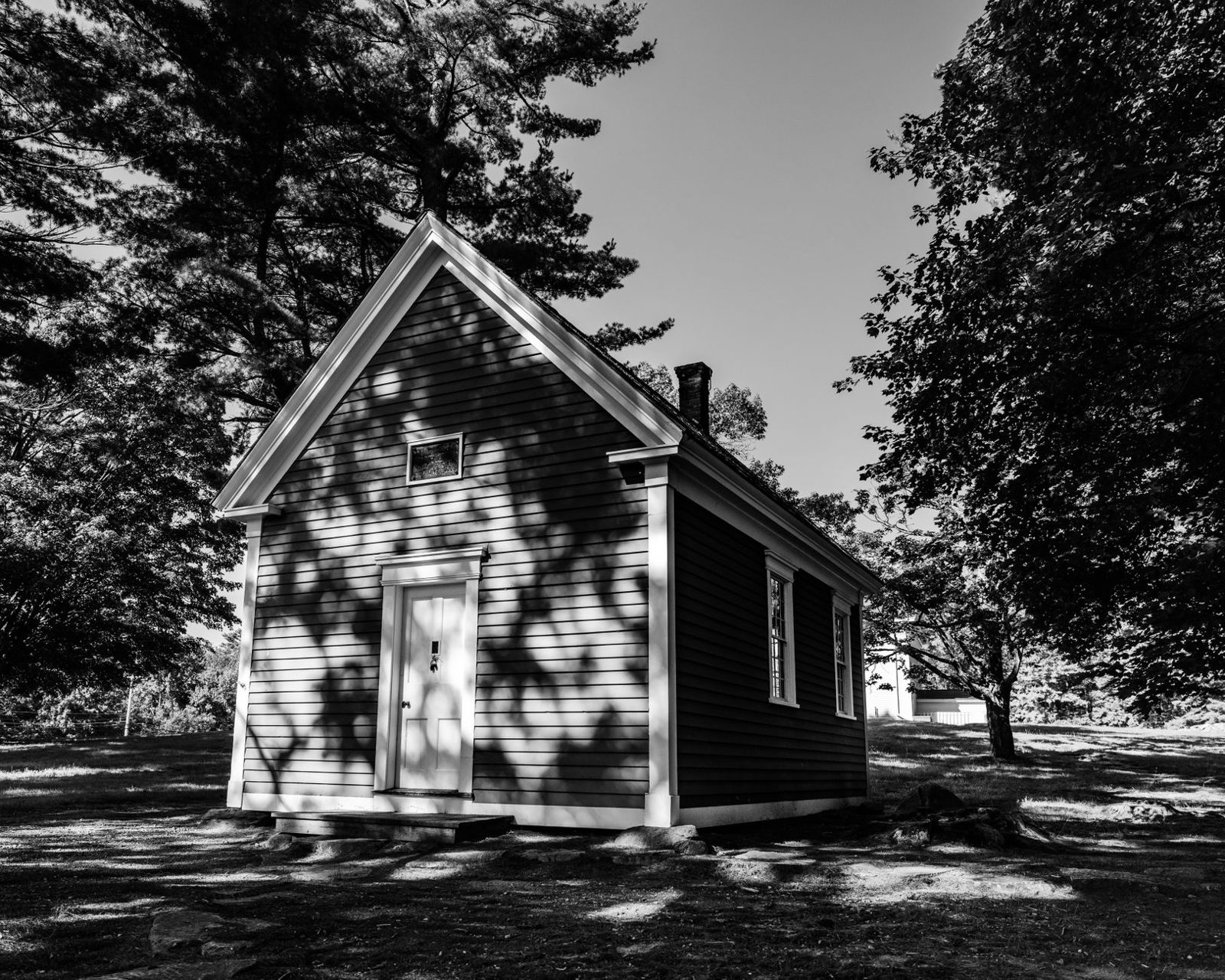
- One-room schoolhouse: a relocated, restored schoolhouse representing rural North Texas education in the early 1900s. The original desks, blackboard, and pot-bellied stove are still in place.
- Original-structure homes: two relocated home buildings from early Frisco families, furnished with period-appropriate items.
- The gazebo: an ornate Victorian-era gazebo at the center of the village, a favorite for engagement and family photos.
- The calaboose (old jail): a one-cell jail with iron bars and the original primitive bunk. It’s the most-photographed structure in the village — kids can’t resist taking turns “in jail.”
- The Frisco depot: the original passenger and freight depot from Frisco’s active rail-stop days, with period luggage, ticketing equipment, and conductor displays inside.
Steam Locomotive & Wooden Caboose
The signature outdoor exhibits are the 60-ton steam locomotive and the wooden caboose beside it. The locomotive is a Frisco Railway-era engine donated for permanent display. It’s not operational, but the engine, the engineer’s cab, and the bell are all accessible — you can climb up and explore, which is exactly the kind of thing kids remember for years. The caboose preserves the original conductor’s quarters: the desk, the lantern, and the bunk that crews used on overnight runs. Between the two, this is the heart of the village.

Hours, Admission & Location
Everything you need to actually get there:
- Address: 6455 Page Street, Frisco, TX 75034, just east of Frisco City Hall and the Frisco Public Library.
- Hours: Tuesday–Saturday, 10 AM–5 PM. Closed Sunday and Monday.
- Admission: free. Donations are encouraged but not required.
- Parking: free and abundant in the lot at 6455 Page Street and at the adjacent library lot, both a 30-second walk from the entrance.
- Restrooms: inside the museum building. The Heritage Village has no outdoor restrooms, so use the museum’s facilities before you head out to the village.
2026 reopening note: the museum closed temporarily for maintenance in late 2025 and is scheduled to fully reopen in 2026. The outdoor Heritage Village stayed partially accessible during the closure. Check the official Frisco Heritage Center page (friscoheritage.org) for current status and the reopening schedule before you drive out. As a free attraction, it’s a natural addition to any list of free things to do in Frisco.
How Long to Spend at the Frisco Heritage Museum
Plan 90 minutes to two hours for a complete Heritage Center visit. A visit that flows well looks like this:
- 15 minutes: watch the Timeline Room introductory video to get your bearings.
- 30–45 minutes: tour the indoor exhibits — printing press, service station, parlor, 1960s den, King Cotton, railroad memorabilia.
- 45–60 minutes: walk the Heritage Village — chapel, schoolhouse, homes, calaboose, depot, locomotive, caboose.
Have more time? The adjacent Frisco Public Library is a beautiful flagship building (go say hi to Rexy the T-Rex), and Frisco City Hall and Kaleidoscope Park are a short walk away.

Special Events & Programming
The Heritage Center runs a year-round calendar that brings the village to life, and timing a visit to one of these turns a good stop into a great one.
- Heritage Day Festival (typically October): the biggest event of the year. Period-costumed volunteers, live craft demonstrations (blacksmithing, candle-making, butter churning), Wild West reenactments, vintage car displays, and food vendors. Free admission.
- Christmas at the Heritage Center (December): a holiday open house with carolers, hot cocoa, period-appropriate decorations throughout the village, and an old-fashioned Santa visit in the Lebanon Chapel.
- Demonstration Saturdays (selected weekends): volunteers in period attire run the working printing press, the schoolhouse classroom, and the calaboose’s history.
- School group tours: the museum is heavily used by Frisco ISD and surrounding districts for elementary field trips.
- Lebanon Chapel weddings: the chapel hosts intimate ceremonies for up to 60 guests, booked through the City of Frisco.
- Educational programs: year-round talks, presentations, and rotating gallery exhibits.
Best Time to Visit the Frisco Heritage Museum
Timing matters more here than at most museums, because half the experience is outdoors in the Texas weather.
- Weekday mornings (10 AM–noon): the quietest window, best for self-guided exploration without school groups.
- Saturday mornings: demonstrations are most likely to be running, and the atmosphere is family-oriented.
- October: pleasant outdoor weather makes the village walk comfortable, and the Heritage Day Festival is the year’s marquee event.
- December: the Christmas at the Heritage Center event is genuinely magical and worth planning around.
- Avoid: peak summer afternoons. The Heritage Village is exposed, and Texas July and August are brutal. Go early morning, or shift your focus to the indoor museum during summer.
Combining the Heritage Museum with Other Frisco Attractions
The location makes it easy to build a half-day cultural outing around the museum:
- Frisco Public Library + Rexy: a 5-minute walk. The flagship library is beautiful, and the famous Rexy T-Rex skeleton replica is a kid magnet.
- Kaleidoscope Park: a 5-minute walk, centered on the Janet Echelman Butterfly Rest Stop sculpture — a striking modern complement to the historic village.
- Texas Sculpture Garden: a 5-minute drive to the free outdoor sculpture garden at Hall Office Park.
- Rail District: a 7-minute drive to the historic downtown, where many buildings preserve the same early-1900s era as the Heritage Center — a great spot for a meal after.
For more ways to fill the day, see our guide to the best things to do in Frisco TX. And since the Lebanon Chapel hosts ceremonies, couples eyeing a small, historic venue should check our roundup of the best wedding venues in Frisco TX.
Family-Friendly Tips
This is one of the most kid-friendly historical attractions in DFW, and a little planning makes it even better.
- Free admission means zero risk if attention spans run short — no sunk cost, no pressure.
- The steam locomotive and caboose are the runaway kid favorites; let them climb up and explore.
- The calaboose jail is a fun photo stop — kids love “going to jail” behind the iron bars.
- The schoolhouse sparks great conversations about how education differed across generations.
- The 1960s den fascinates kids who’ve never seen a rotary phone or a vintage TV.
- Strollers work fine throughout the indoor museum and most of the village, thanks to paved paths.
- Bring water in summer — outdoor village touring means real sun exposure.
- The library next door is a perfect post-museum stop, especially the children’s wing with Rexy.
Planning a whole trip around the kids? Our Frisco family vacation guide maps the rest of a great itinerary.
Frisco Heritage Museum FAQ
What are the Frisco Heritage Museum hours?
The Frisco Heritage Museum is open Tuesday through Saturday from 10 AM to 5 PM. It’s closed on Sunday and Monday. Because of the 2025–2026 maintenance closure, check the official Heritage Center page for current status before you go.
Is the Frisco Heritage Museum free?
Yes — admission to the Frisco Heritage Museum and the Heritage Village is completely free. Donations are appreciated but not required, which makes it one of the best-value cultural stops in the city.
Where is the Frisco Heritage Museum located?
The museum is at 6455 Page Street, Frisco, TX 75034, just east of Frisco City Hall and the Frisco Public Library. Free parking is available on-site and at the adjacent library lot.
How long does it take to tour the Frisco Heritage Museum?
Plan 90 minutes to two hours for a complete visit including the indoor exhibits and the outdoor Heritage Village. If you want to catch the Timeline Room video, the printing-press demonstration, and a thorough village walk, budget closer to two hours.
Can you climb on the steam locomotive at the Frisco Heritage Museum?
Yes — the 60-ton steam locomotive is open for visitors to climb up to the engineer’s cab and explore, and the adjoining wooden caboose is open for self-guided exploration too. It’s the highlight for most kids.
When does the Frisco Heritage Museum reopen in 2026?
The museum closed temporarily in late 2025 for maintenance and is scheduled to fully reopen in 2026. The outdoor Heritage Village remained partially accessible during the closure. Check the official Frisco Heritage Center page (friscoheritage.org) for the most current reopening status.
Can you have a wedding at the Frisco Heritage Museum?
Yes — the historic Lebanon Chapel hosts intimate ceremonies for up to 60 guests, booked through the City of Frisco. It’s one of the most distinctive small-wedding venues in Collin County. For more options, see our best wedding venues in Frisco TX guide.
Plan Your Visit to the Frisco Heritage Museum
The Frisco Heritage Museum is a quietly excellent free attraction that hands every visitor a deeper understanding of the city’s roots — rail-town origins, cotton-economy growth, and the leap into the modern era. It’s the perfect contrast to the bigger, glossier draws like The Star and PGA Frisco, and on a hot day you can balance the air-conditioned indoor exhibits against an early-morning village walk.
Combine it with the Frisco Public Library and Rexy, Kaleidoscope Park, and a meal in the Rail District for a complete cultural-and-historical half-day. For the full playbook, keep our pillar on Frisco history and museums and our guide to things to do in Frisco bookmarked. We update this page as things change — especially around the 2026 reopening and the annual Heritage Day Festival.
Why the Heritage Museum Matters
It’s easy to breeze past a small free museum in a city that now has a Cowboys headquarters and a PGA campus. Don’t. The Heritage Museum is the one place that explains why any of the rest of it exists. Frisco owes its name, its street grid, and its original reason for being to a single decision: in 1902 the St. Louis–San Francisco Railway ran its line through this stretch of prairie, and a scattered farming community called Lebanon literally picked up and moved to sit beside the tracks. The town that grew there took the railroad’s nickname and became Frisco.
That’s not an abstract plaque-on-the-wall story here — you can stand inside the actual depot where tickets were sold, climb into the cab of a locomotive from that era, and walk through the chapel and schoolhouse the early families built. The museum makes the through-line tangible: cotton and cattle economy, then rail connection, then decades as a quiet town of a few thousand, then the explosive modern growth that turned six thousand residents in 1990 into a quarter-million today. Seeing where the story starts changes how the glossy new districts read. The Star and the PGA District feel less like they appeared from nowhere and more like the latest chapter of a place that has always reinvented itself around whatever came down the line — first the railroad, now professional sports and golf.
The Railroad Heritage in Detail
Because the railroad is the reason Frisco exists, the museum leans into that history harder than any other single theme, and it’s the part rail enthusiasts should give extra time. The conductor uniforms, vintage station signs, ticketing equipment, and original timetables in the railroad memorabilia collection aren’t reproductions — they’re the working artifacts of a functioning rail stop, and they pair naturally with the outdoor depot, locomotive, and caboose to tell one continuous story.
Take the time to actually read the timetables and route maps. They show how a small Texas town suddenly plugged into a national network, how goods and people that had moved at the speed of a wagon could now reach Dallas, St. Louis, and beyond. The caboose is the human counterpoint to all that machinery: the desk where the conductor did paperwork, the lantern that signaled down the line, the bunk where crews slept on overnight runs. Standing in that cramped space does more to explain 19th-century railroad life than any textbook. If the trains hook you, the pillar guide to Frisco TX museums points you toward the Museum of the American Railroad and its Big Boy locomotive, which continues the rail story on a much larger scale just a short drive away.

Accessibility & Practical Notes
The Heritage Center is a mixed indoor-outdoor site, so a little foreknowledge helps, especially for visitors with mobility considerations or young kids in strollers. The indoor museum is fully navigable, and most of the Heritage Village runs on paved paths, so strollers and wheelchairs manage the bulk of the outdoor area without trouble. A few of the historic structures have the original raised thresholds or a step or two at the entrance — that’s the nature of century-old buildings — so you may view a couple of interiors from the doorway rather than fully inside.
Restrooms are inside the museum building only; the village has none, so plan a stop before you head out to explore the locomotive and depot. There’s no on-site café, so bring water in warm months and eat before or after (the Rail District, seven minutes away, is the natural meal pairing). Photography is encouraged throughout, and the gazebo, the calaboose, and the steam locomotive are the three spots where you’ll want your camera ready. Because admission is free and the campus is compact, it also slots easily into a larger day — it’s one of the more rewarding stops on any budget-minded tour, and it appears on our list of free things to do in Frisco for exactly that reason.
Making the Most of a Short Visit
If you only have an hour, don’t try to see everything — prioritize. Watch the Timeline Room video first (15 minutes well spent, and it makes everything else click), then head straight outdoors to the steam locomotive, caboose, calaboose, and depot, which are the highest-impact stops and the ones kids will actually talk about afterward. Save the parlor and the 1960s den for last if time allows. On a Saturday, check whether the printing-press demonstration is running before you plan your route, because catching it live is worth reshuffling your visit for.
With a full two hours, do it in order: video, indoor exhibits, then a slow village walk, and finish next door at the library with Rexy the T-Rex. That sequence keeps you in air conditioning during the middle of the day and puts the outdoor walking at the cooler ends, which matters a lot from June through September. Either way, the museum rewards curiosity — the volunteers are passionate and genuinely enjoy going deeper with anyone who asks, so don’t be shy about starting a conversation at the printing press or the depot.
Frisco’s Story, Preserved in One Place
What makes the Heritage Museum worth the detour is that it does something the flashier attractions can’t: it holds the whole arc of Frisco in a single walkable campus. In the space of two hours you move from an 1800s one-room schoolhouse to a 1960s den to the doorstep of a city that now draws visitors from around the world. That compression of 150 years into four acres is genuinely rare, and it’s free, which makes it one of the easiest wins on any itinerary. If you’re mapping out where it fits, our full guide to things to do in Frisco places it alongside the city’s other cultural stops, and our Frisco vacation planning guide helps you slot a half-day of history into the larger trip. Pair the museum with a meal afterward from the best restaurants in Frisco TX in the nearby Rail District and you’ve built a relaxed, low-cost afternoon that leaves you understanding the city far better than the highlight-reel version ever could.